
Why Digital Literacy is Becoming One of the Most Important Skills for South African Learners
The world our children are growing up in is changing faster than ever before. Technology now influences almost every aspect of daily life, from communication and education to banking, healthcare, and employment. As a result, digital literacy has become one of the most important skills learners can develop to succeed in the modern world.
But what exactly is digital literacy?
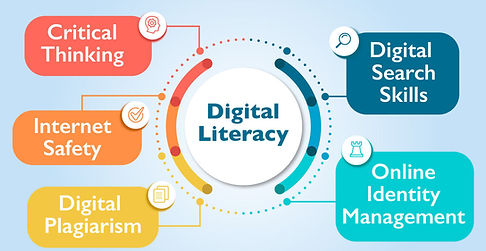
Many people assume digital literacy simply means knowing how to use a computer, tablet, or smartphone. In reality, it is much broader than that. Digital literacy involves understanding how technology works, using digital tools effectively, communicating responsibly online, evaluating information critically, solving problems using technology, and staying safe in digital environments.
Recognizing the importance of these skills, the South African CAPS Coding & Robotics curriculum now includes a Digital Technologies strand. Learners are introduced to concepts such as technology, information technology, computing devices, digital citizenship, and responsible technology use from an early age.
Digital literacy helps learners become creators and problem-solvers rather than simply consumers of technology. Instead of only using apps and websites, learners begin to understand how technology functions, how digital systems work, and how they can use technology to create, communicate, and solve real-world problems.
These skills are becoming increasingly valuable in South Africa's economy.
Employers are looking for individuals who can think critically, adapt to new technologies, solve problems, collaborate effectively, and communicate confidently in digital environments. Developing these skills at school helps prepare learners for future study opportunities, careers, and lifelong learning.

Digital literacy also strengthens learning across multiple subjects. In English, learners use technology to research information, communicate ideas, and evaluate sources. In Mathematics, learners work with logical thinking, patterns, data handling, and problem-solving. In Science and Technology, they investigate systems, innovation, design thinking, and technological solutions. Life Skills is enhanced through lessons on responsible online behaviour, digital citizenship, collaboration, and decision-making.
One of the most important components of digital literacy is digital citizenship.
Learners need to understand how to behave responsibly online, protect personal information, identify trustworthy sources of information, recognize misinformation, and communicate respectfully in digital spaces. These skills are becoming just as important as traditional reading and writing skills.
Digital literacy is not only about preparing learners for future careers in technology. It is about equipping all learners with the knowledge, confidence, and skills needed to participate successfully in an increasingly digital world. Whether learners become doctors, teachers, engineers, entrepreneurs, artists, or business owners, digital literacy will play an important role in their future success.
As Coding & Robotics continues to be implemented in South African schools, many teachers are being asked to teach digital literacy, digital citizenship, and technology concepts alongside computational thinking and coding. For many teachers, this can feel overwhelming without the right support and resources.
At Club Electron, we support South African teachers through practical, classroom-ready Coding & Robotics teacher training. Our SACE-accredited Foundation Phase Coding & Robotics course helps teachers confidently teach Coding & Robotics, computational thinking, digital literacy, and digital citizenship concepts in the classroom.
Teachers who successfully complete the course also earn SACE CPTD points, providing valuable professional development while building confidence in delivering the Coding & Robotics curriculum.
We are also currently developing a SACE-accredited Intermediate Phase Coding & Robotics teacher training course for Grades 4–6. The course will provide practical lesson plans, activities, assessments, resources, and guidance to help teachers successfully implement Coding & Robotics and Digital Technologies within the CAPS curriculum.
To learn more about our teacher training programmes, visit:


Comments